Heatstroke is one of the few emergencies where what you do in the first minutes, before any veterinarian is involved, can decide whether the dog survives — and most cases happen on an ordinary warm day, not in a heat wave.
The most important first
- Heatstroke is an emergency. Cornell University’s Riney Canine Health Center gives a normal body temperature of 100.5–102.5°F (38.1–39.2°C) and describes heatstroke as a rise to 105°F (40.6°C) or higher.
- Cool first, transport second. The Royal Veterinary College advises starting to cool the dog immediately, then calling the vet and having the dog checked even if it seems to recover.
- Exercise, not cars, is the commonest trigger. In a VetCompass study of UK dogs, about three in four heat-related illness events with a known trigger followed exercise; about one in twenty followed confinement in a vehicle.
- Short-faced (brachycephalic) breeds were at increased risk for every type of heat-related illness in that study, and dogs of 10 kg (22 lb) and over had greater odds of exercise-related heatstroke.
- Inside a parked car the temperature can rise about 20°F in ten minutes, according to the American Veterinary Medical Association, and cracking the windows makes no difference.
Why it is a breeder’s problem
A kennel concentrates heat risk. You may keep several adults of a breed that tolerates heat poorly, a heavily pregnant or lactating bitch who is producing a great deal of body heat, a whelping room that is deliberately kept warm for newborns, and dogs that travel to shows, matings and veterinary appointments in vehicles. Each of these is manageable; together they need a plan rather than good intentions.
Who is most at risk
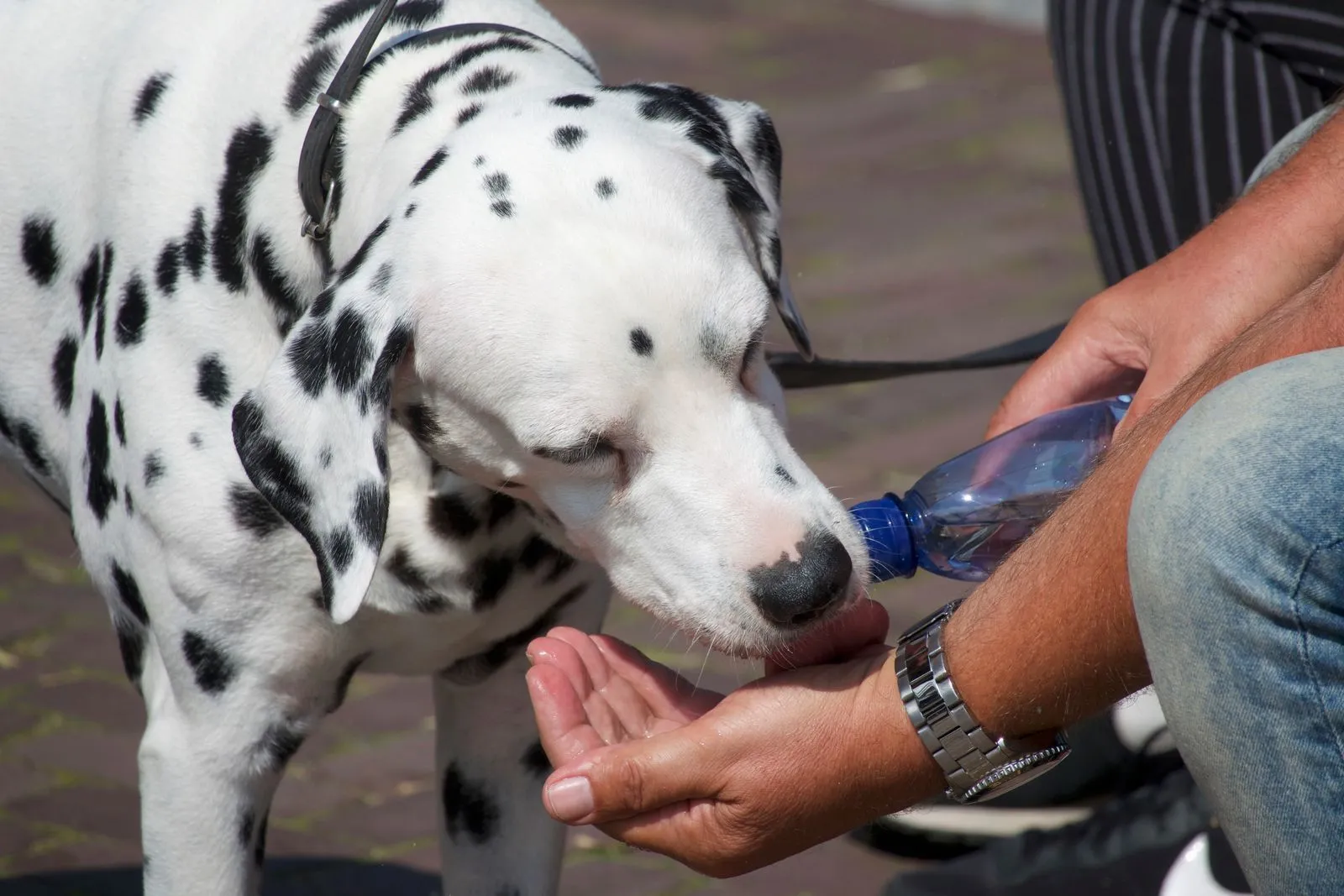
The VetCompass study by Hall, Carter and O’Neill, published in Animals in 2020, analyzed heat-related illness in dogs under primary veterinary care in the UK. Brachycephalic breeds were at increased risk for all three types of heat-related illness the authors examined, exertional, environmental and vehicular, and the Chow Chow had the highest risk for the exertional and environmental forms. Cornell’s list of dogs at higher risk adds elderly dogs, overweight dogs, dogs with thick or dark coats, and dogs with respiratory or cardiac disease such as laryngeal paralysis or heart disease.
If you breed a short-faced or heavy-coated breed, heat tolerance is part of the dog’s health, not just its comfort. A dog who struggles to cool itself on a warm walk is giving you information that is relevant to breeding decisions as well as daily care.
Recognizing heatstroke
The Royal Veterinary College describes early signs as panting that may become distressed or noisy, restlessness, drooling, red gums or tongue, a fast heart rate, and vomiting or diarrhea; later signs are lethargy, confusion, weakness or collapse, and seizures. Cornell adds bloody diarrhea. A dog who lies down and will not continue a walk on a warm day, or who stays panting heavily long after stopping, should be cooled and watched, not urged on.
First aid: cool first, transport second
The Royal Veterinary College’s advice is to move the dog somewhere cooler and start cooling immediately, before setting off for the clinic. Cold-water immersion is an effective approach for young, healthy dogs. For older dogs or dogs with health problems, pour water that is cooler than the dog over its body and use a fan or breeze to speed evaporation. Use the coldest water you have to hand, from a tap, hose, tub or lake: you do not need ice or ice packs, and you should not wait for water to warm up. Only immerse a dog that is conscious, and keep its head above the water. Do not drape a wet towel over the dog and leave it there; a towel left lying on the coat traps heat. If towels are all you have, keep re-soaking them and keep air moving over the dog. Offer small sips of water without forcing the dog to drink. Then call the veterinarian, and have the dog examined even if it appears to recover.
Cornell gives the same priority: wet the dog with cool water and, if you have to drive, keep it in front of the car’s air conditioning on the way. Heatstroke needs intensive veterinary care; first aid is what gets the dog there alive.
Know when to stop cooling. If you have a rectal thermometer, check the temperature as you go and stop active cooling at about 103°F (39.5°C), or as soon as the dog is clearly recovering, so that it is not overcooled. VCA Animal Hospitals gives the same stopping point.
Cool before the car, not instead of it. A dog’s temperature can keep rising for several minutes after exercise stops, and RVC VetCompass research at canicross events found that putting dogs straight into a vehicle slowed their cooling. In UK practice records, only about one in five dogs with heat-related illness had been cooled before they were transported. Start cooling where you are, run the air conditioning before loading the dog, and keep air moving during the drive.
Why the vet check matters even if the dog seems fine. A dog that looks back to normal can still develop kidney injury, clotting problems or shock in the hours that follow, as Cornell describes. In a hospital study of 54 dogs with heatstroke, dogs that arrived more than 90 minutes after the event were more likely to die. Call ahead so the clinic is ready for you. A dog that has had heatstroke once is more likely to have it again, so plan that dog’s exercise and travel with extra care.
Heat planning in the kennel
Most prevention is ordinary routine, decided in advance so that nobody has to judge it on a hot afternoon:
- Shade and cool, ventilated resting areas indoors and out, with water available at all times; the RVC suggests adding ice to keep drinking water cool.
- Exercise and training early in the morning or in the evening on warm days, and shorter sessions for at-risk breeds and individuals — the exertional pattern in the VetCompass data is the reason.
- A thermometer in every room or building where dogs are kept, read and written down rather than guessed, and a plan for a power failure that stops fans or air conditioning — see crisis and contingency planning.
- Kennel buildings designed for heat as well as cold, as discussed in kennel housing and welfare.
The pregnant dam, the whelping room and the litter
The whelping room is a balancing act. Newborn puppies cannot regulate their own temperature and need a warm microclimate, but the dam lying with them does not, and a heavily pregnant or nursing bitch is generating a great deal of heat of her own. The answer is a warm zone for the puppies within a room the dam can tolerate, so that she can move away from the heat source when she needs to — the setup described in warmth and the whelping-box microclimate. Watch the dam, not only the puppies: a nursing bitch panting heavily and reluctant to settle in the box may be too hot. Exercise for the pregnant bitch should be adjusted on warm days as in exercise, environment and daily life during pregnancy.
Travel, shows and the journey home
Never leave a dog in a parked vehicle in warm weather, even briefly. The AVMA notes that the interior can rise about 20°F within ten minutes and more than 40°F above the outside temperature within an hour, and that cracking the windows makes no difference. Plan journeys to shows, matings and appointments for cooler parts of the day, carry water, and stop somewhere shaded. The same applies to puppies going to new homes: the travel advice in the first journey and the first days at home should include a line on heat, and a buyer collecting on a hot day should know not to leave the puppy in the car while they stop.
In practice
On a warm, overcast morning a breeder takes three young adults of a short-faced breed for their usual forty-minute walk. Twenty minutes in, one of them begins to pant noisily and lags behind. The breeder stops in the shade, soaks the dog with water from a bottle, calls the clinic and drives with the air conditioning on full. The dog recovers. Walks for that breed now happen before eight in summer, last twenty minutes, and the forecast high is written on the kennel whiteboard each morning.
(Illustrative, composite scenario.)
When to call your vet
- Heavy, noisy panting that does not settle within a few minutes in the shade, or a temperature above 103°F (39.5°C) after exercise or heat: start cooling and call.
- Collapse, wobbliness, confusion, seizures, vomiting or diarrhea (especially with blood), or very red, pale or gray gums: this is an emergency. Keep cooling on the way and go now.
- After any episode of heatstroke, even if the dog seems to recover. Complications can appear hours later.
- A pregnant or nursing bitch who is panting heavily, restless, and will not settle in the whelping box even after the room has been cooled.
- A dog that has had heatstroke before and shows any early signs.
- If in doubt, call — your vet would rather hear from you early.
Work on it
A few minutes here will teach you more than re-reading the article.
Ask yourself
- Which of my dogs would I expect to overheat first, and have I planned their exercise around that?
- Does everyone who walks or transports my dogs know to cool first and transport second?
- What happens to the temperature in my kennel building or whelping room if the power goes off on a hot day?
Find out & check
- Ask your veterinarian which of your dogs they consider at higher risk of heatstroke, and agree what you will do on the way to the clinic if it happens.
Do one thing
- Put a thermometer in every room where dogs are kept and add a hot-weather routine to your kennel emergency plan today.
Was this article helpful?
Anonymous. We do not store your name, email or IP address.
Sources & further reading
- Cornell University College of Veterinary Medicine, Riney Canine Health Center — Heatstroke: A medical emergency. vet.cornell.edu
- Royal Veterinary College — Heatstroke in dogs and cats: prevention, symptoms and first aid tips for pet owners. rvc.ac.uk
- Hall, E. J., Carter, A. J. & O'Neill, D. G., Animals 2020;10(8):1324 — Dogs Don't Die Just in Hot Cars — Exertional Heat-Related Illness (Heatstroke) Is a Greater Threat to UK Dogs. doi.org
- Hall, E. J., Carter, A. J., Bradbury, J. et al., Veterinary Sciences 2023;10(7):465 — Cooling Methods Used to Manage Heat-Related Illness in Dogs Presented to Primary Care Veterinary Practices during 2016–2018 in the UK. doi.org
- Carter, A. J., Hall, E. J., Bradbury, J. et al., Journal of Thermal Biology 2024;121:103827 — Post-exercise management of exertional hyperthermia in dogs participating in dog sport (canicross) events in the UK. doi.org
- Bruchim, Y., Klement, E., Saragusty, J. et al., Journal of Veterinary Internal Medicine 2006;20(1):38–46 — Heat stroke in dogs: a retrospective study of 54 cases (1999–2004) and analysis of risk factors for death. academic.oup.com
- VCA Animal Hospitals — Heat Stroke in Dogs. vcahospitals.com
- American Veterinary Medical Association — Pet safety in vehicles. avma.org
Where evidence is limited, recommendations rest on established practice and expert judgment, and may be updated as knowledge develops. This article is general information and does not replace an examination by your veterinarian. If you suspect an emergency, contact a veterinarian immediately.
Next steps
- Read next: Poisoning risks in the kennel and home.
- Related: Warmth and the whelping-box microclimate.
- Return to the area hub: Running a kennel.