Everything before this point has been done for the litter as a whole — weighing, worming, feeding, the socialization program — and somewhere around five or six weeks the unit of work quietly changes from the litter to the individual, because each of these puppies now has to be understood well enough to be placed.
The most important first
- This area is the decision layer between raising a litter and selling it: what you conclude here decides which puppy you keep, which home each one goes to, and what you are able to tell each buyer honestly.
- Repeated everyday observation across weeks carries more information than a single assessment session; in a meta-analysis of 31 studies, personality measures in puppies were consistent at r = 0.30 against r = 0.51 in adult dogs.
- Handle temperament as a set of separate dimensions rather than a label — Swedish behavior-test data from 15,329 dogs of 164 breeds resolved into five narrow traits plus a broad shyness–boldness factor.
- Evaluation is not only behavioral: conformation, physical development, working aptitude and a documented health check all belong before any puppy is promised to anyone.
- The buyer is assessed with the same seriousness as the puppy, because matching is a two-sided judgment, and this area hands over directly to sales and the transition home.
What this area covers
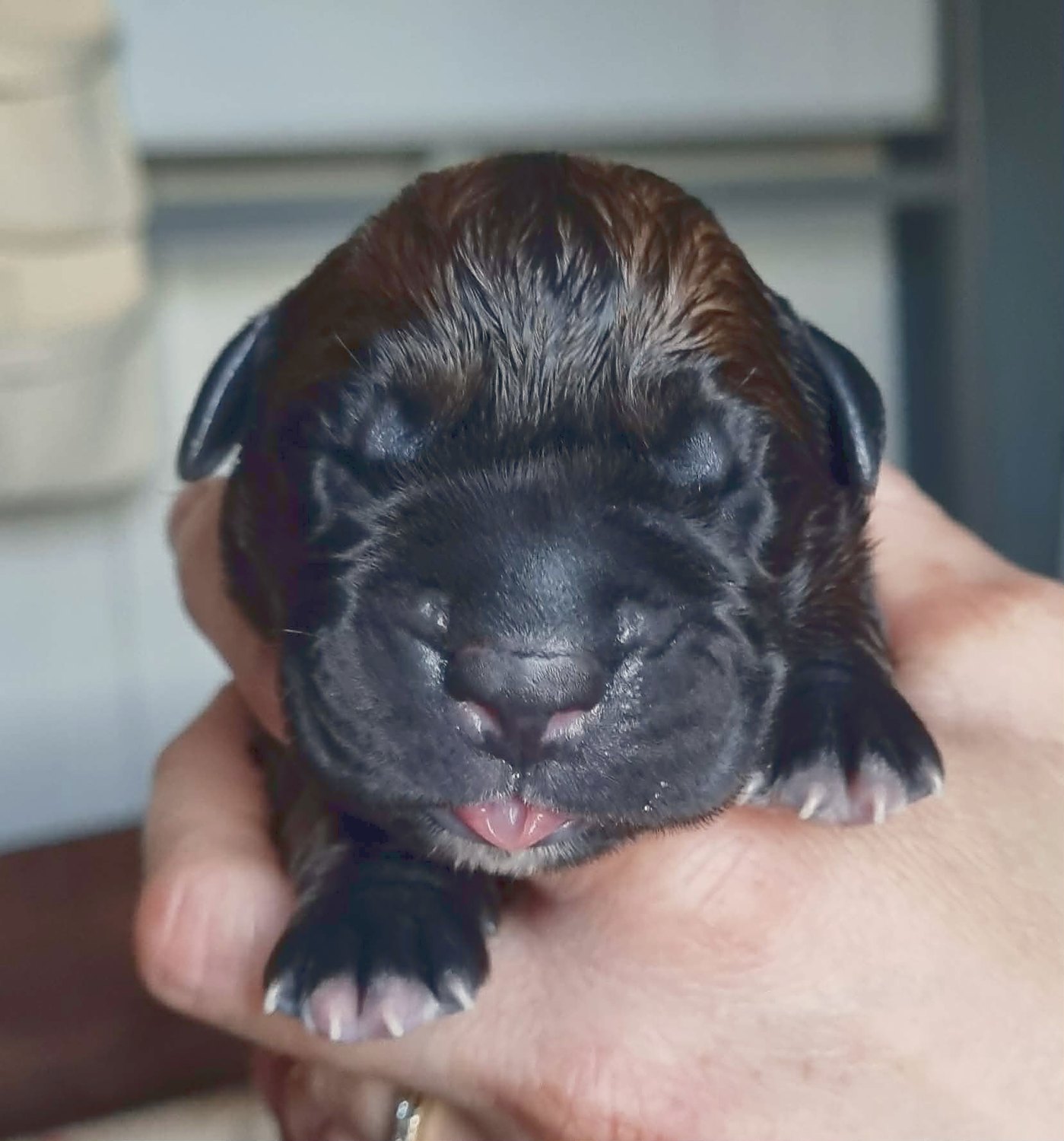
This area begins with method — observing and documenting individual puppies, the dated, unglamorous record that everything else rests on — and then with temperament and individual differences, the dimensions along which puppies in the same litter genuinely differ. It examines the formal instruments and their boundaries: puppy aptitude tests and their limits and, in an evidence article, what puppy tests can and can’t predict. It then turns to the non-behavioral judgments — evaluating conformation and physical development in puppies, assessing working aptitude and function and evaluating puppy health before placement — before the two decisions breeders find hardest, choosing a future breeding prospect and which puppy to keep. It closes on the receiving end: assessing prospective puppy buyers, matching puppy to home and placing puppies with special needs.
Why this area stands on its own
The work in this area is not a protocol. Feeding a litter, worming it and keeping it clean are procedures with right answers; deciding that the middle-sized dog puppy belongs with the retired couple and not with the agility home is a judgment made on partial information, and one that is final in practice. A puppy placed in the wrong house is rarely un-placed, and the cost of getting it wrong falls on the dog for a decade. That asymmetry is why the area is treated separately rather than folded into either raising the litter or selling it, and why it is worth slowing down for: nothing here has to be decided in the week a buyer happens to ask.
It is also the part of breeding in which you are the least reliable instrument you own. You have watched these puppies since they were wet, you have named them, you have a favorite, and you have already told two buyers something about their puppy that you now half-believe. This is not a character flaw. Observer bias is well documented in animal behavior research generally: in one study, veterinary students who watched identical video recordings scored the animals differently depending on the false context they had been given beforehand. Much of this area is therefore about method — writing down what happened rather than what it meant, keeping description separate from conclusion, and borrowing a second pair of eyes.
The third reason is the gap between how confident the field sounds and what the evidence supports. Structured puppy tests at around seven weeks are widely used, and their predictive power is modest at best: a behavior test given to 630 German shepherd puppies at eight weeks produced medium-high to high heritability estimates for the tested traits, yet its correspondence with the same dogs’ performance at 450 to 600 days was negligible. That is not an argument for evaluating less. It is an argument for evaluating repeatedly, recording what you saw, and describing puppies to buyers rather than promising them.
Finally, the area is two-sided in a way no other part of the process is. Every other judgment you make concerns dogs. Here half the assessment concerns people — their household, their hours, their experience, their honesty about what they want — and a puppy cannot be matched to a home that has not itself been assessed.
How this area connects to what comes next
Most of the raw material comes from the weeks just past. Socialization, habituation and environmental exposure, handling and body-handling exercises and the work on fear, recovery and building resilience are not only interventions; they are also a standing series of small experiments on eight individuals, and the response column of the socialization checklist is evaluation data you have already collected. The physical side draws in the same way on growth and body condition in puppies and physical development of the growing litter, and the health judgment rests on vet checks, microchipping and registration and the pre-sale health checklist.
Forward, the area feeds two things at once. It feeds buyers, sales and the transition home, where your notes become the matching conversation, the written description in the puppy pack and the expectations you set. It also feeds the program itself — the puppy you keep, and why, is a decision belonging to designing a long-term breeding program as much as to this litter. And it is only closed much later, in follow-up and the next generation, when the dogs are grown and you find out which of your reads at seven weeks turned out to be right.
Timing and the paperwork that goes with each puppy
In many places the law sets eight weeks as the minimum. US federal rules under the Animal Welfare Act require dogs to be at least eight weeks old and weaned before they are shipped in commerce. England’s licensing rules forbid licensed breeders and sellers from selling a puppy under eight weeks or separating it from its mother. Dogs Australia’s code sets the same floor for its members. Many US states and other countries have their own rules, so check where you and your buyer live.
Each puppy should go home with its veterinary record, the dates of vaccinations and worming, and its microchip details. Any known health issue should be disclosed in writing and acknowledged by the buyer. Encourage every new owner to see their own veterinarian within the first few days.
If a puppy has an open health question at seven or eight weeks, such as a heart murmur, a retained testicle, a bite that causes trauma, or marked and persistent fear, get your veterinarian’s view before you match it to a home. Sometimes the right answer is a short delay, a particular kind of home, or a special-needs placement agreed openly with the buyer.
Work on it
A few minutes here will teach you more than re-reading the article.
Ask yourself
- If a buyer asked me today why their puppy rather than the others, could I answer from records, or only from impression?
- Have I decided in advance what I am evaluating for, or will I judge each puppy against whichever quality it happens to show?
- Do I assess prospective homes as carefully as I assess the puppies going into them?
Find out & check
- Check your breed club’s or registry’s guidance on what is looked for in a young puppy of your breed, and on the age at which their evaluations or gradings normally begin.
Do one thing
- Write down, before you look at the litter again, the three things this litter was bred to produce — then use those as the column headings for your notes.
Was this article helpful?
Anonymous. We do not store your name, email or IP address.
Sources & further reading
- American Kennel Club — Placing Puppies in Pet Homes. akc.org
- Fratkin, J. L. et al., PLOS ONE 2013;8(1):e54907 — Personality Consistency in Dogs: A Meta-Analysis. journals.plos.org
- Wilsson, E. & Sundgren, P.-E., Applied Animal Behaviour Science 1998;58(1–2):151–162 — Behaviour test for eight-week old puppies: heritabilities of tested behaviour traits and its correspondence to later behaviour. sciencedirect.com
- Svartberg, K. & Forkman, B., Applied Animal Behaviour Science 2002;79(2):133–155 — Personality traits in the domestic dog (Canis familiaris). sciencedirect.com
- Tuyttens, F. A. M. et al., Animal Behaviour 2014;90:273–280 — Observer bias in animal behaviour research: can we believe what we score, if we score what we believe?. sciencedirect.com
- US Code of Federal Regulations — 9 CFR §2.130, Minimum age requirements. ecfr.gov
- UK legislation — The Animal Welfare (Licensing of Activities Involving Animals) (England) Regulations 2018, Schedule 6. legislation.gov.uk
- Dogs Australia — Code of Practice (July 2023). dogsaustralia.org.au
Where evidence is limited, recommendations rest on established practice and expert judgment, and may be updated as knowledge develops.
Next steps
- Read next: Observing and documenting individual puppies.
- Related: Socialization: the breeder’s most important behavioral work.
- This area sits between raising the litter and selling it: it is where the work of the previous weeks becomes a set of decisions about individuals.